
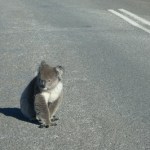
 Blog inspiration can come from diverse sources. In the lead up to Xmas, I was having a lazy afternoon at home with local ABC radio (which I think was broadcast nationally) on the in background. The guest being interviewed was a food safety expert who was advising on things like how long you can leave the turkey or ham or other food out of the fridge or how long is it safe to eat the leftovers etc etc
The discussion turned to taking (transporting) food to the Xmas BBQ. There was a text message from a listener along the lines of “can I take roadkill to a BBQ”. The immediate response from the expert was “That’s a very Northern Territory question”.
It turns out the short answer is “yes” you could take roadkill to a BBQ provided it was really fresh. There are some fairly obvious health risks if its not “really fresh” and I’ll spare you the details of how bodies commence decomposition and whether you should “gut” the carcass.
However, then there were some follow up text messages effectively saying it was illegal to pick up roadkill. It turns out that this is correct. In NSW it is the Biodiversity Conservation Act 2016 which applies and I note the following:
- Section 2.5(1) makes it an offence to deal in (or attempt to deal in) a protected animal or plant;
- All native mammals (except dingos) are protected animals (see Schedule 5);
- Section 2.5(2)(d) makes it clear that “deals in” includes “possession” (which has the same meaning as in the Crimes Act); and
- the section applies “whether or not it is a living animal or plant”
So, possession of native animal roadkill could make you liable for a tier 4 monetary penalty. A tier 4 penalty for an individual is $22,000 (see 13.1(5)(d)). That probably covers most kangaroos and common roadkill.
The fines get higher and the threat of imprisonment looms if you picked up a threatened species or an animal that was part of a threatened ecological community.
So, food safety issues aside, picking up roadkill for a BBQ could be quite an expensive exercise!
Creative commons acknowledgment for the photograph.